What Does the 365 Buttons Meme Mean?
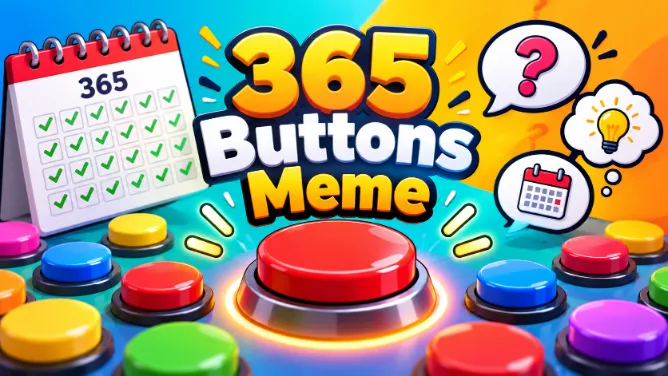
The 365 Buttons meme centers on the idea of using 365 physical buttons as a visual reminder of the days in a year.
Tamara described the buttons as a way to see how rapidly the days pass. Her concept was connected to personal awareness and making better use of free time.
A simple way to picture the concept is:
- 365 buttons represent 365 days.
- One button represents one day.
- A person can move one button each day.
- The changing pile provides a physical reminder of time passing.
- The routine can encourage a person to pay more attention to daily life.
Some TikTok users later showed their own versions using jars, containers, or two separate groups of buttons. The exact method was never the main point. The personal meaning behind the idea mattered more.
How Did the 365 Buttons Meme Start?
The trend can be traced to December 21, 2025, under a TikTok video from @abbieabbieabbie0 about taking a 2026 rebrand seriously. Tamara commented that she planned to get 365 buttons, one for every day, because she wanted to do more things and become more conscious of time.
People naturally wanted clarification.
One person asked what the 365 buttons were. Tamara replied that there would be one for every day. More questions followed because viewers wanted to know exactly how she planned to use them.
She later explained that the buttons were meant to help her see the passage of days and remind herself to have fun and do plenty of things.
The exchange took another turn after people kept asking for more details. Tamara eventually responded that the idea only needed to make sense to her and that she did not feel like explaining it to everyone else. That response became the part many users remembered most.
Why Did 365 Buttons Become a Meme?
The humor came from the contrast between a very personal idea and the internet’s demand for an explanation.
People online are used to explaining trends, routines, aesthetics, habits, and personal goals. Tamara’s response rejected that expectation. She had an idea that worked for her, and she did not feel required to provide a complete explanation.
That attitude made the phrase easy to reuse.
Users began applying the 365 Buttons concept to their own situations. A person could describe an unusual habit, a personal rule, or a strange New Year’s goal and then attach the 365 Buttons idea to it.
The format became funny because the phrase could sound meaningful, mysterious, or completely absurd depending on the context.
The Original 365 Buttons Concept
The basic idea can be summarized in this table:
| Element | Meaning |
|---|---|
| 365 buttons | One for each day of the year |
| Main purpose | A visual reminder of passing time |
| Person behind the original comment | Tamara |
| Platform | TikTok |
| Original comment period | December 2025 |
| Major meme period | Early January 2026 |
| Main theme | Personal time awareness |
| Viral twist | Refusing to explain a personal idea repeatedly |
These details match reporting from Know Your Meme, Daily Dot, Euronews, and other publications that covered the trend during January 2026.
The Famous Response Behind the Meme
The buttons themselves were only one part of the trend. Tamara’s response became the memorable piece of internet language.
Her message communicated a simple boundary: a personal routine does not always require approval or detailed justification from strangers.
That idea gave creators an easy template.
Someone could post a personal habit and pair it with a variation of the 365 Buttons concept. Another person could use the phrase after describing an unusual goal. Others turned the entire idea into jokes about being mysterious, independent, or unwilling to explain every personal decision.
The result was a meme that could work in many different situations without requiring a complicated setup.
How TikTok Users Recreated the Idea
TikTok creators quickly started making their own versions of the trend.
One documented example came from @rini.kids, who posted a video showing a button being moved from one jar to another as part of a daily routine. That video received more than one million views within a few days, according to Know Your Meme’s record of the trend.
Other creators focused on the humorous side rather than actually using buttons.
Common formats included:
- Short videos about personal goals
- Screenshots of the original comment exchange
- Button-themed edits
- Jokes about refusing to explain personal decisions
- New Year’s resolution posts
- Videos about the speed of time
- Parodies of serious self-improvement routines
- Edits using popular music and internet aesthetics
365 Buttons and the Passage of Time
There is a genuine idea underneath the humor.
A year contains hundreds of individual days, yet people can easily experience a month or several months without paying much attention to how quickly time has passed. A physical object can make an abstract idea more visible.
That gives the button method a simple psychological appeal.
Instead of looking at a calendar and seeing dozens of dates, a person sees a physical collection becoming smaller or moving from one container to another.
For some people, that can serve as a personal reminder to:
- Spend more time on hobbies
- Make plans with friends
- Try new activities
- Pay attention to ordinary days
- Reduce unnecessary procrastination
- Create memorable experiences
- Stay aware of personal goals
The meme became humorous, but the original idea had a sincere personal purpose.
Why the Phrase Works So Well as Internet Humor
Internet memes frequently succeed through simplicity. A phrase does not need a complicated explanation to become reusable.
“365 buttons” works because it sounds oddly specific.
The number gives the phrase structure. The word “buttons” makes it unusual. The original context adds a personal-development angle. Tamara’s refusal to provide further explanation adds the final comedic layer.
Together, those pieces create a phrase people can reuse without copying the entire original conversation.
That helped the meme travel beyond its first TikTok thread.
365 Buttons Meme vs. a Normal New Year’s Resolution
A traditional New Year’s resolution usually sounds familiar: exercise more, save money, read books, learn a skill, or spend more time with family.
The 365 Buttons idea takes a completely different route.
| Traditional Resolution | 365 Buttons Idea |
|---|---|
| Usually has a clear target | Uses a symbolic object |
| Often focuses on achievement | Focuses on awareness of time |
| Easy to explain | Deliberately personal |
| Usually follows a familiar format | Feels unusual and random |
| Can be measured through results | Can be represented physically |
That difference helped make the concept memorable on social media.
The “It Only Has to Make Sense to Me” Idea
The strongest cultural part of the meme centers on personal meaning.
People sometimes avoid unusual habits because they worry about how others will react. The 365 Buttons trend turned that situation into a joke.
A person can have a private routine without creating a detailed presentation for everyone else. A journal, playlist, collection, daily ritual, calendar system, or personal challenge can have meaning without needing universal approval.
That does not mean every unusual habit needs to be copied. The meme simply gave people a humorous way to talk about personal choices.
Why the Meme Spread Beyond TikTok
TikTok served as the main starting point, but the 365 Buttons idea appeared across other online spaces too.
Screenshots and reposts helped the original exchange reach people who had never seen the first video. Reddit users discussed the trend, while meme creators used the phrase in new formats. Publications such as Daily Dot, Euronews, Deseret News, and The Tab also reported on the phenomenon.
The format worked well for social media because it needed very little context.
A screenshot of the original exchange could generate a reaction. A short caption could turn the phrase into a joke. A video could show someone moving a button from one container to another.
What Makes the 365 Buttons Meme Funny?
The humor comes from several small details working together.
First, 365 buttons sounds unnecessarily specific.
Second, the original explanation was sincere rather than deliberately comedic.
Third, viewers kept asking for more information.
Fourth, Tamara eventually stopped trying to satisfy those questions.
That final part transformed a personal routine into a meme about privacy, individuality, and internet over-analysis.
The joke works partly because people recognize themselves in both sides. Some people want every detail explained. Others have habits that make perfect sense privately but sound strange out loud.
Is the 365 Buttons Trend Still Relevant?
The strongest wave of the trend occurred around the beginning of 2026, particularly during the first weeks of January. Coverage from January 2026 documents widespread TikTok activity, reposts, reactions, and different versions of the button concept.
Meme popularity can change rapidly, so individual formats may fade even after the phrase remains recognizable.
The original idea, however, has a simple concept that can still be adapted: use something physical to remind yourself that each day passes.
What is the 365 Buttons meme?
The 365 Buttons meme comes from a TikTok idea about using 365 buttons to represent the 365 days of a year. The concept became popular online after viewers discussed the idea and the creator’s responses.
Who started the 365 Buttons meme?
The trend traces back to a TikTok commenter named Tamara, who shared the 365-button idea in December 2025.
What do the 365 buttons represent?
Each button represents one day of the year. The physical buttons act as a visual reminder of time passing.
Why did 365 Buttons go viral?
The unusual idea attracted attention, while the creator’s responses to people asking for more explanation gave users material for jokes and memes.
Is the 365 Buttons idea serious?
The original concept appears to have been a genuine personal method for becoming more aware of time and making better use of each day.
Can I use the 365 Buttons method myself?
Yes. A person could use buttons, beads, coins, paper slips, or another small object to represent individual days and create a personal time-tracking routine.