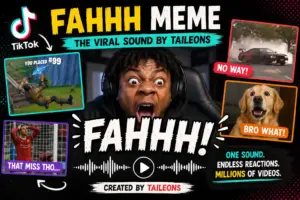
What Does “Fahhh” Mean?
“Fahhh” does not belong to any language. It is simply an exaggerated vocal expression.
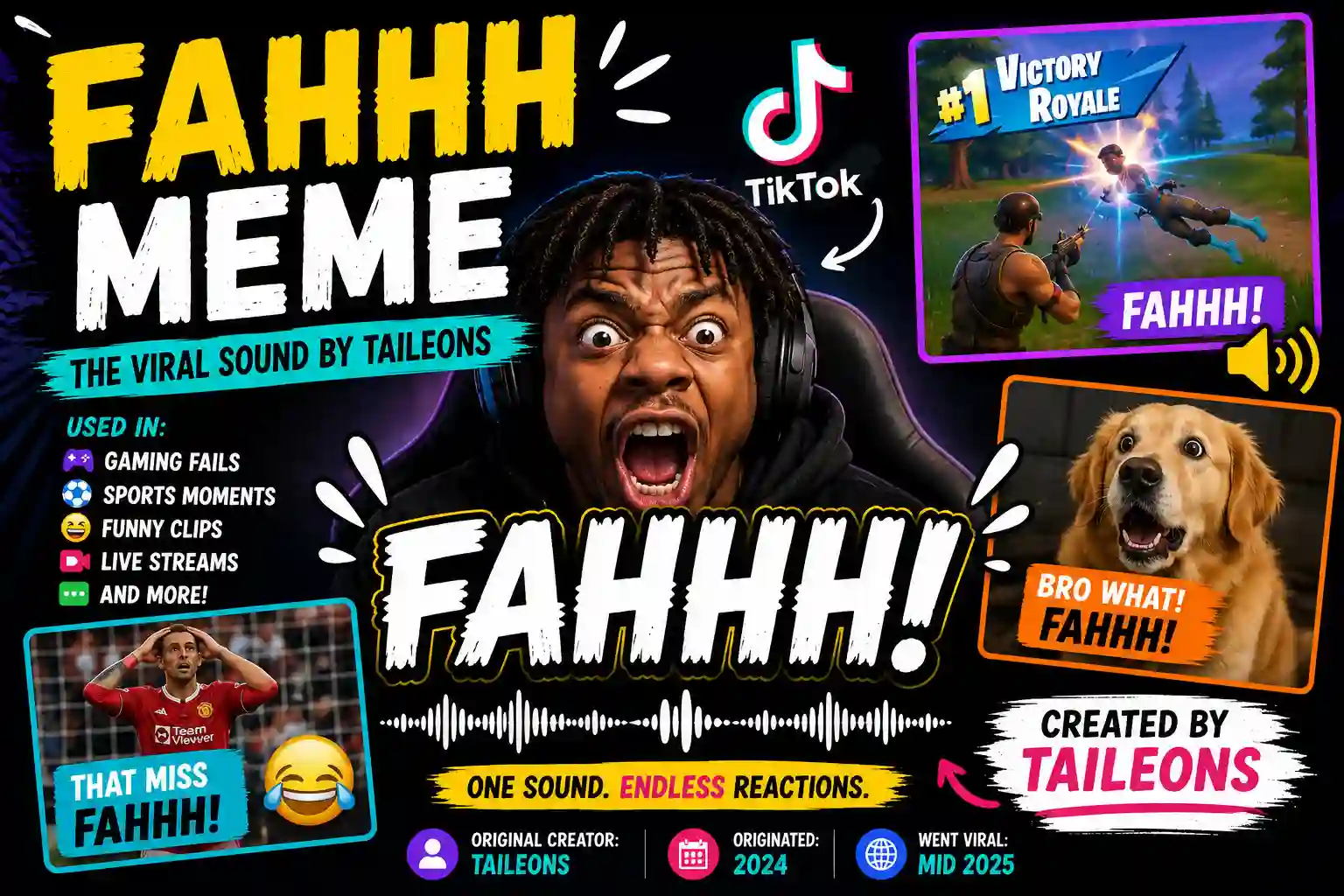
According to Taileons, the sound originated from an exaggerated way of saying an expletive during his content creation. After heavy distortion, viewers mainly heard a loud “Fahhh” instead of an actual word.
Because the audio has no fixed definition, creators use it in many situations.
| Situation | Why “Fahhh” Fits |
|---|---|
| Someone falls | Dramatic reaction |
| Gaming mistake | Expresses frustration |
| Sports fail | Adds comedy |
| Surprise ending | Makes the moment louder |
| Funny accident | Improves comedic timing |
This flexibility helped the meme travel across different communities without requiring translation.
Origin of the Fahhh Meme
The original audio belongs to Taileons, a gaming creator active on Twitch, TikTok, and YouTube.
Researchers at Know Your Meme traced the sound back to content recorded during 2024. Taileons used the vocal effect repeatedly in his streams before the internet adopted it as a meme.
The first major milestone arrived on July 7, 2025, after TikTok creator @premiumtai uploaded a clip featuring Taileons and the sound effect. That upload collected millions of views and introduced the audio to a much larger audience.
A few months later, Taileons shared another TikTok explaining that he originally recorded the sound in 2024. This confirmation removed much of the speculation surrounding its source.
Fahhh Meme Timeline
| Date | Event |
|---|---|
| 2024 | Taileons records and uses the sound in his own content. |
| July 7, 2025 | @premiumtai uploads a clip featuring the audio. |
| August 2025 | TikTok editors begin remixing the sound into videos. |
| September 2025 | Taileons confirms he created the sound during 2024. |
| Late 2025 | Meme spreads across TikTok, Instagram Reels, YouTube Shorts, and gaming edits. |
Who Is Taileons?
Taileons is a content creator whose videos mainly focus on gaming, livestreams, humorous reactions, and internet culture.
Before the “Fahhh” sound reached millions of users, many followers already heard him using it naturally during his streams. The reaction eventually became part of his online personality.
Several creators attempted to copy the audio after it exploded across TikTok, but viewers still credit Taileons as the original source. Major meme databases list him as the creator of the sound effect.
Why Did the Fahhh Meme Go Viral?
Many internet trends disappear within days. The Fahhh sound lasted much longer because editors could insert it into almost any type of content.
Some reasons behind its popularity include:
- Very short audio clip
- Instantly recognizable
- Works without subtitles
- Fits gaming edits
- Fits sports compilations
- Adds comic timing
- Easy to remix
- Works across different languages
Creators also started producing “accuracy reenactments,” attempting to imitate Taileons’ original scream. Those videos collected millions of views on TikTok during the meme’s biggest growth period.
How TikTok Helped the Meme Spread
TikTok’s editing tools made the sound available to thousands of creators within weeks.
Editors started pairing “Fahhh” with:
- Football misses
- Basketball bloopers
- Racing crashes
- Minecraft fails
- Fortnite eliminations
- GTA roleplay clips
- Pet videos
- School jokes
- Anime edits
Soon afterward, Instagram Reels and YouTube Shorts adopted the same format.
Because the sound lasted only about one second, creators could insert it without interrupting the pacing of a short video. That simple editing style encouraged thousands of reposts across multiple platforms.
Why Viewers Remember the Sound
Many viral sounds rely on music, dialogue, or famous movie scenes. The Fahhh meme follows a different formula.
Instead of explaining a joke, the sound delivers the reaction itself.
That makes it useful for:
- Unexpected endings
- Instant failures
- Embarrassing moments
- Comedy edits
- Livestream highlights
- Sports compilations
Its simplicity allows viewers to recognize it almost immediately, even before seeing the video.
Popular Fahhh Meme Formats
The audio appears across many content styles instead of remaining limited to gaming videos. Editors add it at the exact second something unexpected happens, making the moment feel louder without adding extra dialogue.
Some of the most common formats:
- Gaming fail compilations
- Football and basketball misses
- Pet videos with funny reactions
- School prank clips
- Car drifting edits
- Livestream highlights
- Anime action edits
- Unexpected plot twists
- “Expectation vs. Reality” videos
- Meme compilations
Most creators keep the clip very short. The timing usually matters more than the video itself.
Why Creators Keep Using It
Many meme sounds disappear after a few weeks. The Fahhh meme remained active because it works in many situations without requiring any explanation.
Editors prefer it because it is:
- Easy to synchronize with video edits
- Short enough for fast-paced content
- Funny without subtitles
- Suitable for every language
- Effective in gaming and sports clips
- Instantly recognizable among regular social media users
These qualities helped the sound remain useful long after its first viral wave.
Common Misconceptions
Several claims about the Fahhh meme circulate online. Some are inaccurate or lack reliable evidence.
| Claim | Reality |
|---|---|
| The sound came from a movie. | False. It originated from Taileons’ content. |
| AI generated the audio. | No verified source supports this claim. |
| TikTok created the meme. | TikTok popularized it, but Taileons recorded it first. |
| The sound has a dictionary meaning. | It is simply an exaggerated vocal reaction. |
| Another creator owns the original audio. | Meme databases credit Taileons as the creator. |
Checking reliable meme archives helps separate verified information from internet rumors.
Why the Meme Works So Well
Comedy usually depends on timing, and the Fahhh sound fits that requirement perfectly.
The audio lasts only a moment, allowing editors to place it exactly where viewers expect a reaction. That small addition changes an ordinary clip into something much more entertaining.
Another advantage is simplicity.
A viewer does not need background information, subtitles, or language skills to understand why the sound appears. The reaction speaks for itself.