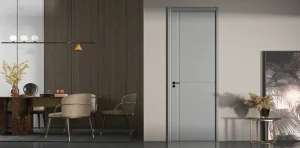
Consider the Overall Interior Design
The first factor to consider is how the modern interior doors will fit into the home’s existing decoration. Interior doors should complement the surrounding walls, flooring, furniture, and architectural details.
Modern homes often feature simple shapes, neutral colors, and uncluttered spaces. Choosing doors with similar characteristics can create a balanced appearance.
Some popular design options include:
- Flush doors with smooth surfaces.
- Minimalist rectangular panel designs.
- Natural wood-finish doors.
- Matte black contemporary doors.
- Glass-panel configurations.
- Concealed doors with matching wall finishes.
For example, white flush doors can complement minimalist interiors, while walnut finishes can add warmth to contemporary spaces. Homeowners should consider the overall color scheme before selecting a particular style.
Choose the Right Door Material
Material selection affects appearance, durability, weight, maintenance, and sound-control potential. Different materials are suitable for different rooms and household requirements.
Solid Wood
Solid wood doors offer natural grain patterns and a substantial feel. They are available in different wood species and can be finished with stains, paints, or protective coatings.
Their main advantages include:
- Natural appearance and texture.
- Multiple finishing possibilities.
- Strong and substantial construction.
- Good sound-control potential.
However, wood can respond to changes in temperature and humidity. Proper finishing and maintenance are important for long-term performance.
MDF
Medium-density fiberboard is commonly used for modern interior doors because it provides a smooth surface suitable for painting and decorative details.
MDF doors are available in different designs and can complement contemporary interiors. Standard MDF should be protected from excessive moisture, especially in bathrooms and other humid areas.
Solid-Core Doors
Solid-core doors have a dense internal structure and generally feel more substantial than hollow-core alternatives.
They are worth considering for bedrooms, offices, and other rooms where sound control and privacy are important.
Hollow-Core Doors
Hollow-core doors are lightweight and generally more affordable. They can be suitable for closets, storage areas, and other spaces where advanced sound insulation is not essential.
Glass and Aluminum
Glass and aluminum combinations create a contemporary appearance while allowing light to move between rooms. They are often used in home offices, kitchens, and shared living areas.
Homeowners should compare frame construction, glass specifications, and hardware quality before purchasing.
Evaluate the Available Space
Room dimensions and furniture placement should influence the type of door you choose. Traditional hinged doors require enough clearance to swing open, which can create difficulties in compact spaces.
Modern alternatives can provide greater flexibility.
Sliding Doors: Move along a track and are useful for closets, room dividers, and selected room entrances.
Pocket Doors: Slide into a wall cavity when opened, keeping the doorway clear.
Bifold Doors: Fold into sections and are commonly used for wardrobes and storage areas.
Hinged Doors: Remain a practical option for bedrooms, bathrooms, and most standard room openings.
Before selecting a configuration, measure the available opening and consider how people will move through the space.
Select Suitable Colors and Finishes
Door finishes contribute significantly to the appearance of a modern interior. The right color can complement existing decoration or create an attractive contrast.
Popular choices include:
- White: Creates a bright, clean, and versatile appearance.
- Light Oak: Adds natural warmth and works well with neutral interiors.
- Walnut: Provides a deeper and more sophisticated look.
- Matte Black: Creates contrast and complements contemporary architecture.
- Gray: Offers a balanced neutral option.
- Beige: Introduces warmth without overwhelming the color scheme.
Matte and satin finishes are popular in modern homes because they provide an understated appearance.
When comparing finishes, consider the color of the flooring, cabinets, walls, and furniture. It is also useful to view samples under the lighting conditions of the actual room.
Think About Privacy Requirements
Different rooms require different levels of privacy. Bedrooms and bathrooms generally need more privacy than living rooms or shared spaces.
The door’s material, construction, glass design, and locking system should reflect its intended use.
For private areas, homeowners can consider:
- Solid-core doors.
- Full-panel designs without transparent glass.
- Frosted or textured glass where light is desirable.
- Suitable privacy locks.
- Properly fitted door frames.
For living areas, glass-panel doors may be appropriate because they allow visibility and natural light while maintaining separation.
Selecting the right design for each room helps create a comfortable and functional home.
Consider Sound Insulation
Noise control is another important consideration, especially in busy households. Doors can help reduce sound transmission between rooms, although their performance depends on several factors.
Solid-core doors generally offer better sound-control potential than lightweight hollow-core models.
They can be useful for:
- Bedrooms.
- Home offices.
- Study rooms.
- Entertainment spaces.
- Guest rooms.
However, the door alone does not determine sound performance. Gaps around the frame, under-door clearance, seals, and surrounding walls also affect how much noise passes between spaces.
Homeowners who prioritize a quieter environment should consider the complete door assembly rather than focusing only on its material.
Check Durability and Maintenance Requirements
Interior doors are used regularly, so their construction and surface quality matter. A suitable door should withstand normal household use without requiring excessive maintenance.
Before purchasing, consider the following:
- Resistance to everyday scratches and surface wear.
- Quality of the finish and protective coating.
- Suitability for rooms with moisture exposure.
- Ease of cleaning.
- Strength of hinges and hardware.
- Availability of replacement components.
Wood doors may require occasional refinishing, while painted MDF surfaces generally need routine cleaning and protection from moisture. Glass doors require regular cleaning to maintain their appearance.
Choosing materials according to the room’s conditions can help reduce maintenance problems.
Pay Attention to Door Size and Proportions
The dimensions of an interior door influence both functionality and appearance. A door that is too narrow may make movement difficult, while an oversized design may not suit the available opening or surrounding architecture.
Before ordering, measure:
- Door opening width.
- Opening height.
- Wall thickness.
- Existing frame dimensions.
- Floor clearance.
- Available space for opening mechanisms.
Tall doors interior modern can create an impressive contemporary appearance, particularly in homes with higher ceilings. However, their proportions and installation requirements should be evaluated carefully.
Accurate measurements help ensure a suitable fit and reduce the possibility of expensive adjustments.
Choose Hardware That Matches the Design
Handles, hinges, locks, and other accessories contribute to the appearance and performance of interior doors.
Modern hardware generally features simple shapes and practical mechanisms.
Popular options include:
Lever Handles: Comfortable to operate and available in several finishes.
Matte Black Handles: Create a bold, contemporary appearance.
Brushed Nickel Hardware: Offers a subtle metallic finish.
Concealed Hinges: Help maintain a clean appearance where compatible with the door construction.
Privacy Locks: Provide additional convenience for bedrooms and bathrooms.
Magnetic Latches: Support smooth and convenient closing.
Soft-Close Mechanisms: Help control movement in compatible sliding or folding door systems.
Hardware should be selected according to the door’s weight, construction, and intended use.
Explore Glass Options for Better Natural Lighting
Glass-panel doors can make connected spaces feel brighter and more open. They are particularly useful in properties where natural light is limited in hallways or interior rooms.
However, the type of glass should match the room’s privacy requirements.
- Clear glass provides visibility and maximum openness.
- Frosted glass allows light through while reducing direct visibility.
- Textured glass introduces decorative detail.
- Patterned glass creates visual interest.
- Laminated safety glass can provide additional protection against glass breakage.
Appropriately specified safety glazing is important, particularly in doors located in frequently used areas.
Compare Your Budget and Long-Term Value
The cost of interior doors varies according to material, size, construction, finish, hardware, and installation requirements.
Basic hollow-core doors are generally more affordable, while solid wood, customized glass, oversized, and concealed designs may require a larger investment.
When comparing prices, consider more than the initial purchase cost.
A useful evaluation should include:
- Door material and construction quality.
- Surface finish and durability.
- Hardware and accessories.
- Installation expenses.
- Maintenance requirements.
- Warranty and manufacturer support.
Choosing the least expensive option may not always provide the best long-term value. It is better to compare product specifications and select a door that meets the room’s practical requirements.
Make Sure the Installation Is Properly Planned
Even a well-designed door may not perform as expected if it is installed incorrectly. Poor alignment can cause sticking, uneven gaps, noisy operation, and problems with locks or hinges.
Professional installation can be particularly important for pocket doors, oversized panels, concealed systems, and heavy solid-core products.
Before installation, confirm that the opening, frame, hinges, tracks, and hardware are compatible with the selected door.
Proper fitting helps support smooth operation and improves the finished appearance.
Conclusion
Choosing the right doors for a modern home requires careful consideration of design, materials, space, privacy, durability, and installation. Modern interior doors are available in numerous styles, from simple flush panels and natural wood finishes to glass combinations and space-saving sliding systems.
Homeowners should evaluate the needs of each room before making a purchase. Material quality, sound control, maintenance, hardware, and accurate measurements can all influence long-term satisfaction.
By comparing these factors and selecting suitable doors interior modern designs, homeowners can create a more coordinated, comfortable, and functional living environment.
