Why Does Timing Matter More Than the Sound Itself?
A perfect sound in the wrong spot still falls flat. Viewers react to rhythm before they think about content. When a sound lands off the beat, the brain notices the mismatch instead of the joke.
Real laughter follows its own timing rules too. Psychologist Robert Provine found that people usually laugh during pauses and at the ends of complete statements. Laughter rarely breaks into the middle of a phrase. He called this pattern the punctuation effect.
That pattern is a useful guide for editors. A meme sound works like a built-in laugh. If real laughs land at the end of a thought, your sound should too. Placing it mid-sentence feels unnatural, even when the clip itself is hilarious.
How Do You Pick the Right Meme Sound for a Punchline?
The sound should match the type of joke, not just the energy of the scene. For video editors timing a punchline, a meme soundboard like soundbuttonslab.com, used by YouTubers, TikTok creators, and streamers, offers instant clips like the vine boom, record scratch, and sad trombone. Testing a few options against the actual footage beats guessing from memory.
Think about what the punchline is really saying. A sudden twist calls for a vine boom or a dramatic “dun dun dun.” An awkward silence fits a cricket chirp. A fail or a letdown pairs naturally with a sad trombone. When the sound matches the joke’s meaning, viewers get it instantly. When they clash, the sound feels random.
Where Exactly Should the Sound Hit?
Most punchlines have three possible landing spots. Each one creates a different kind of laugh, so pick based on the joke. These spots work best:
On the Last Word
Placing the sound right as the final word ends works for verbal jokes. It acts like a drum hit after a one-liner. Start the clip as the last word fades, not while it is still being spoken. Starting too early cuts off the very word that makes the joke work.
On the Reaction Face
Sometimes the funniest moment is someone’s face after the line. Cut to the reaction and hit the sound on that first frame. The viewer sees the shock and hears it at the same time. This doubles the impact without adding any extra noise.
After a Beat of Silence
A short pause before the sound builds tension. Let half a second of quiet sit after the punchline, then drop the clip. This works well for deadpan humor, where the joke slowly sinks in. Wait too long, though, and the moment drifts away.
How Do You Line Up the Sound in Your Editor?
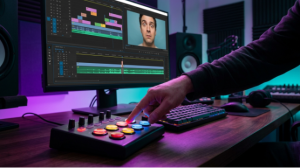
Rough placement is not enough for comedy. Even a few frames of drift can make a sound feel late. Most editors, including CapCut, Premiere Pro, and DaVinci Resolve, let you zoom into the timeline for precise placement.
Start by finding the exact frame where the punchline lands. Then look at the clip’s waveform and find its first sharp spike. That spike is where the sound truly begins, so line it up with your target frame. Play the moment several times at full speed. If it feels slightly late, nudge the clip one or two frames earlier and test again.
When Does a Meme Sound Ruin the Joke?
Some jokes are funnier with no sound at all. A strong visual gag or a clever line can speak for itself. Adding a meme sound on top can feel like explaining the joke to the viewer.
Overuse causes the same problem. If every small moment gets a vine boom, the big moments lose their punch. Viewers start tuning out the sound or, worse, find it annoying.
Volume matters as well. A sound that blasts over your voice can send people straight to the mute button. Keep meme sounds clear above the background audio but never louder than the punchline itself.
Which Habits Keep Meme Sounds Feeling Fresh?
Meme sounds age quickly, and audiences notice when a clip feels tired. A few simple habits keep your timing sharp and your sounds surprising:
- Save your loudest sound for the biggest punchline in the video.
- Rotate between several sounds instead of repeating one favorite.
- Watch the final cut on your phone before posting.
- Ask a friend to watch and notice where they actually laugh.
That last check is the most honest test you have. If their laugh lands before your sound does, move the sound earlier. If it lands after, give the joke a little more room.
